
Nasal Strip Sample Comparison: A Buyer Approval Record
Compare nasal strip OEM samples with traceable IDs, a buyer review table and an approval worksheet. Keep construction, packaging and open questions together.
Compare nasal strip samples against the same written brief. Give every sample an identifier, separate product construction from packaging, and record each check as approved, revise or open. A similar appearance is not proof of matching construction or performance.
A private label nasal strip project can involve several catalog references, artwork versions and packaging choices. A loose photograph labelled “sample approved” does not explain which combination you accepted. This guide shows how to build a comparison record before you select a reference for an OEM quotation or production discussion.
1. Identify the sample before comparing it
Assign an internal sample ID to each received reference. Keep the supplier's catalog code as a separate field. Write down the date received, the drawing or specification version, the material information provided and whether packaging was included. If a sample has no traceable reference, ask the supplier to identify it before using it as the basis for an order.
Use the same brief for the samples you want to compare. For example, a change in strip dimensions should be recorded separately from a change in wrapper artwork. Otherwise, a buyer can select the appearance of one sample while unintentionally ordering the construction of another.
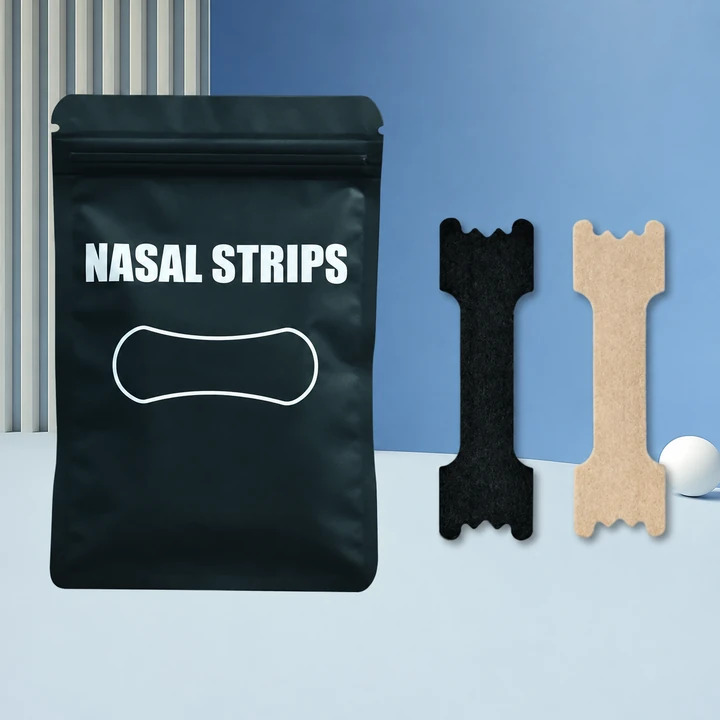
For MZBIO references, start with NASAL-01 non-woven nasal strips, NASAL-04 multi-color nasal strips or the NASAL-15 PET retail-box reference. Review each construction separately. The Non-Woven, PE and PET Nasal Strip Material Guide explains the information to request before choosing a reference.
2. Compare one field at a time
The table below is a blank purchasing record. Replace “Sample A” and “Sample B” with your actual sample IDs. Agree any measurement method and tolerance with the supplier before recording a pass or fail. A blank cell means the information is missing, not that the sample meets your requirement.
| Field | Written requirement | Record for each sample | Decision |
|---|---|---|---|
| Identity | Catalog code, sample ID and specification version | Sample A: ___ / Sample B: ___ | Confirmed / open |
| Construction | Selected material and described spring construction | Supplier description and supporting specification | Confirmed / open |
| Dimensions and outline | Drawing, measurement method and agreed tolerances | Measured result and method used | Approved / revise / open |
| Appearance and printing | Color reference, logo version and printed surface | Observed difference and photograph reference | Approved / revise / open |
| Liner and individual wrapper | Requested layout and wrapper artwork version | Included / not included; issues for review | Approved / revise / open |
| Finished pack | Strips per pack and packaging configuration | Actual count and packaging reference | Approved / revise / open |
| Further evaluation | Product-specific questions and agreed evaluation | Applicable report or remaining question | Confirmed / open |
Keep observations specific: “the logo uses artwork V2 rather than V3” is actionable. “The print is wrong” leaves the supplier to guess which file or position needs correction. Attach a photograph with a sample ID when it helps explain a visible difference.
3. Separate what you can see from what needs evidence
Visual review can document the outline, printed appearance and pack contents. It cannot by itself establish a wear duration, an adhesion claim, a skin-safety claim or a breathing-related benefit. Treat those as separate questions about the exact finished product, relevant evidence and intended market.
If a supplier provides a report, ask which sample and construction it covers, what was evaluated and under which conditions. Record the document reference alongside the sample ID. A supplier assessment or a report for a different model should not silently become approval of the selected product. This purchasing checklist is not a validated performance-test protocol.
4. Close the comparison with a written decision
Choose one of three statuses for each item: approved, revise or open. Then identify the sample selected as the reference and list the conditions still outstanding. An approved cutting outline can coexist with open packaging artwork; make that separation visible instead of approving the whole project in one sentence.
When requesting a revision, name the affected field, the requested change, the new drawing or artwork version and whether a replacement sample is needed. Ask the supplier to confirm any effect on price, sampling cost, order quantity or production schedule. Do not assume that a revised construction inherits the previous sample approval.
Before discussing a production order, reconcile the selected sample with the Nasal Strip Packaging and RFQ Guide. Confirm the individual-strip count, finished-pack count and quantity per version on the same quotation. Use the general OEM Patch Sample Approval Checklist for the remaining commercial and documentation questions.
Buyer questions
Can I compare two samples from photographs alone?
Photographs can help identify a visible difference. They do not replace the actual sample, dimensional information or product-specific evidence. Mark any conclusion that cannot be supported as open.
Does accepting the sample confirm the MOQ or lead time?
No. Request written confirmation of the commercial terms for the selected specification. MZBIO's MOQ depends on product characteristics. Sample fees are paid upfront and refunded after an order is placed; the amount and application of the refund are confirmed with the quotation.
What should I send with a sample comparison request?
Include the catalog reference, sample IDs, the current drawing and artwork versions, the comparison record and a short list of unresolved questions. Add the intended pack configuration and destination country so the quotation and document discussion refer to the same project.
Use a blank buyer record
Download the blank nasal strip sample comparison record (TXT, English). Leave unresolved fields open. This template does not record a test result or approve a product.
Discuss your product reference
Send the reference, drawing or artwork version, quantity per design, pack contents and destination country. MOQ depends on product characteristics. A sample fee is required upfront and refunded after an order is placed; confirm the amount and how the refund is applied in the quotation.
If a submitted reference uses a different placement or support system, consult the Nasal Strip and Nasal Dilator Product Format Guide before treating it as a like-for-like sample.
Scope: a buyer workflow prepared from the MZBIO catalog and purchasing guides. Examples are illustrative. Product feasibility, evaluations and commercial terms require confirmation for the selected specification.