
Silicone Gel Eye, Forehead and Chest Patches: A Private Label Product Guide
Plan silicone gel beauty patches for the eye area, forehead and chest with defined shapes, contact surfaces, care instructions and branded packaging.
Silicone gel beauty patches can be developed as eye patches, forehead patches and chest patches. A useful private label brief defines the application area, patch outline, material construction and retail set before artwork and packaging are finalized.
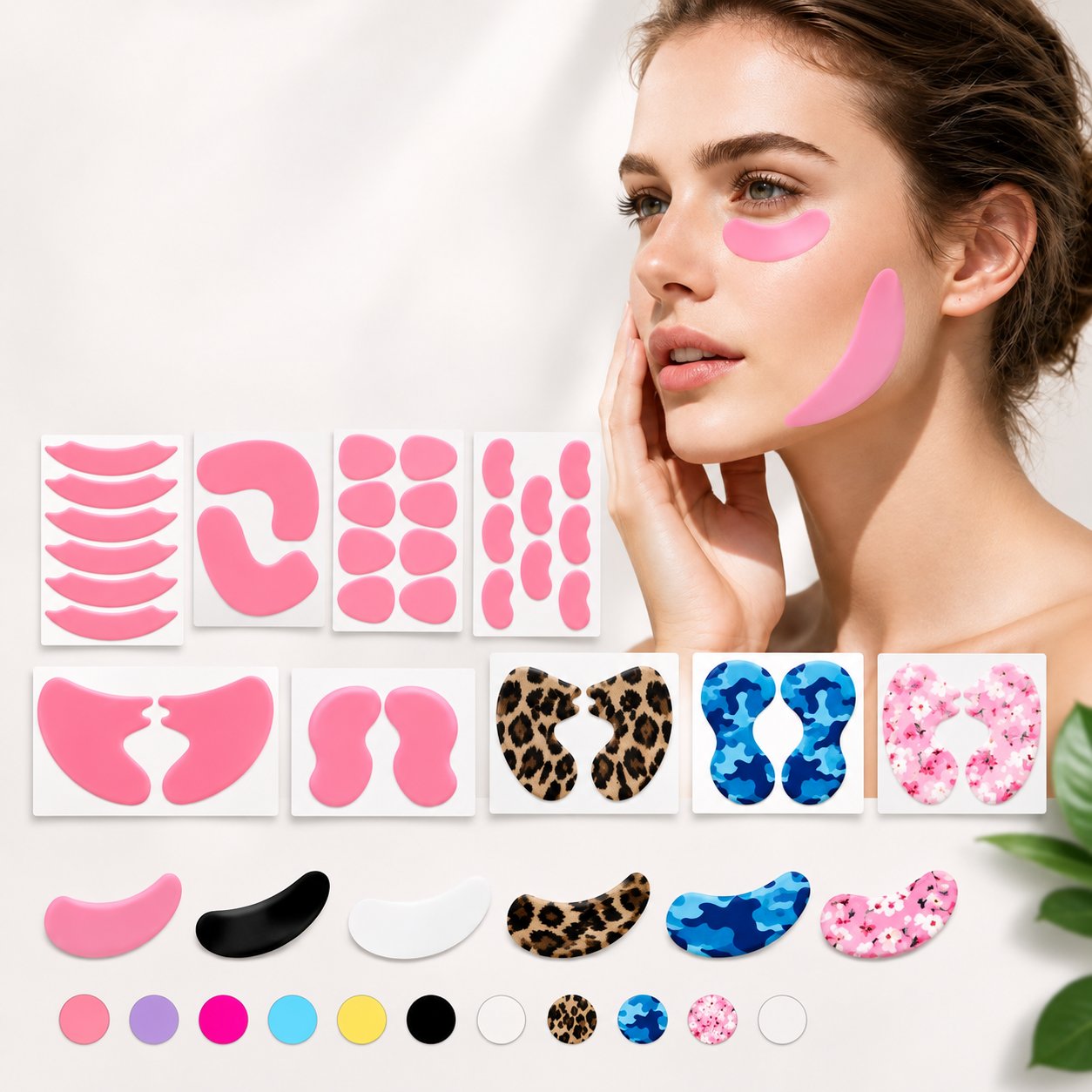
Choose the application area before the outline
Eye patches, forehead patches and chest patches serve different positions in a beauty product range. For the eye area, specify whether the project uses a pair of under-eye patches or another defined outline. For the forehead, send the intended coverage area and dimensions. For the chest, identify the upper-chest or décolletage area and provide a drawing of the desired shape.
Keep a separate specification for each outline. A larger patch should not simply inherit the dimensions, packaging or instructions of a smaller eye patch. Review the actual sample against the intended area and retail presentation.
Confirm the silicone gel construction and contact surface
The phrase silicone gel patch should lead to a detailed material discussion. Ask for the finished layer construction, thickness, backing or carrier where applicable, release liner and skin-contact surface. Confirm whether the selected reference is supplied as a reusable product and what care instructions apply to that exact design.
Silicone gel and hydrogel are separate project briefs. Keep their approved samples and material descriptions identifiable even when they share a similar eye, forehead or chest outline. Material changes should trigger another sample review before packaging is approved.
Plan single-area products or a coordinated patch set
A beauty brand may plan an eye-patch pair, a forehead patch, a chest patch or a coordinated set. State whether quantities refer to individual patches, pairs or finished sets. This avoids comparing a single piece with a multipiece retail pack.
- Define dimensions and thickness for every patch in the set.
- Confirm color and any proposed logo print area with the sample.
- Specify the liner, protective storage arrangement and outer packaging.
- Provide label language and proposed application, removal and care text.
- Agree the quantity per design rather than only a combined order total.
Review samples and packaging as one finished product
Check outline, edge finish, surface appearance and fit inside the chosen packaging. If reuse is part of the specification, request the relevant product instructions and supporting information; do not assign a generic reuse count to every silicone gel patch.
The Silicone Eye and Face Patch Catalog provides visual starting points. Send the eye, forehead or chest application area, desired dimensions, order quantity and packaging concept for a project-specific discussion. Cosmetic wording on the package should correspond to the finished product and supporting evidence rather than being inferred from the material name.
The EYE-08 Silicone Under-Eye Patch Specification provides a silicone catalog reference for an under-eye project. Confirm the complete layer construction, thickness, contact surface and packaging on the selected sample; the silicone catalog label alone does not confirm every silicone gel specification or a reuse count.
Discuss a product specification
Send the product reference, intended use, dimensions, quantity per design and packaging concept. MOQ depends on product characteristics. Sample fees are paid upfront and refunded after an order is placed; confirm the amount and terms in the quotation.
Use the OEM Patch Sample Approval Checklist to keep the selected silicone gel construction, contact surface, outline and packaging version together; reuse instructions require confirmation for that exact design.