
Hydrocolloid Acne Patches: Materials, Shapes and Private Label Packaging
Explore hydrocolloid pimple patches, decorative shapes, sheet layouts and retail packaging for a clearly specified private label acne patch range.
MZBIO acne patch projects in this article use hydrocolloid. Start with the hydrocolloid construction, then define patch size, outline, sheet layout and retail packaging. Silicone gel and hydrogel eye, forehead and chest patches belong to separate beauty patch projects.
Start with a hydrocolloid acne patch specification
For a private label acne patch range, write hydrocolloid acne patches in the product brief. This gives the material discussion a clear starting point before choosing colors, decorative artwork or retail packaging. Include a reference sample or product drawing so the material description and finished appearance refer to the same item.
A hydrocolloid patch name does not specify every ingredient. Confirm the finished construction, thickness and any added ingredients separately. The American Academy of Dermatology acne advice discusses hydrocolloid patches and topical acne ingredients separately. Avoid inferring a medicated formula from the product name or a printed design.
Build a coordinated range of shapes and sizes
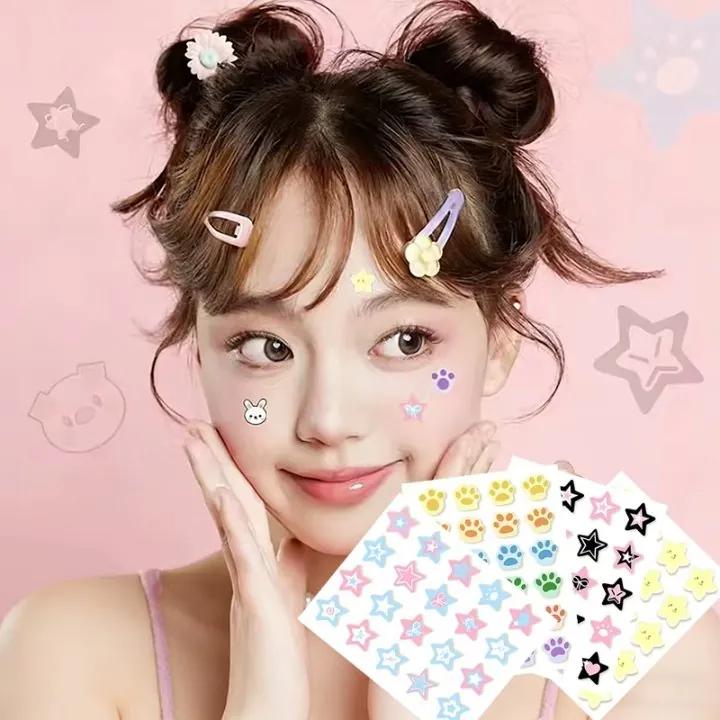
Round, star, heart and custom outlines can give a hydrocolloid patch range a recognizable visual identity. A brand can organize different sizes on one sheet or use a consistent decorative outline across several packs. Discuss the usable patch area as well as the outside dimensions when reviewing a shape.
Approve the material sample, cutting outline and artwork together. Transparent and decorative designs should each be checked against their own approved reference. A packaging mock-up helps evaluate appearance, while the physical sample establishes the agreed dimensions and construction.
Define sheet layout and finished pack quantities
Separate patches per sheet, sheets per pouch and pouches per retail box. A 24-piece pack could contain two sheets of 12 patches; another layout with the same total count may use different patch sizes. Clear purchasing units make competing quotations easier to compare.
- State the hydrocolloid material requirement and sample reference.
- List patch dimensions, thickness and quantity of each shape.
- Confirm release liner and sheet arrangement.
- Supply pouch or box artwork, language and pieces per finished pack.
- Review product-specific instructions and proposed package wording.
Prepare the next private label discussion
Browse the Private Label Hydrocolloid Acne Patch Catalog, then use the Private Label Hydrocolloid Acne Patch Specification Checklist to prepare the material and packaging brief. The Custom Acne Patch Artwork and Sheet Layout Guide helps organize the design handoff.
Keep hydrocolloid acne patches separate from silicone gel and hydrogel eye, forehead and chest patches when planning a mixed beauty range. Each product family needs its own material, shape and packaging specification. Send the quantity per design and target market with the brief so the quotation can address the exact retail configuration.
Discuss a product specification
Send the product reference, intended use, dimensions, quantity per design and packaging concept. MOQ depends on product characteristics. Sample fees are paid upfront and refunded after an order is placed; confirm the amount and terms in the quotation.
Use the OEM Patch Sample Approval Checklist to keep the selected acne patch material, outline, sheet layout and packaging version in one approval record.